
Planning for retirement involves more than deciding when to finish working. For established professionals, understanding superannuation, tax considerations and long-term financial needs is an important part of preparing for the next stage of life. Wilson Pateras provides specialist accounting and financial advice to help clients navigate these decisions and plan for retirement with greater clarity.
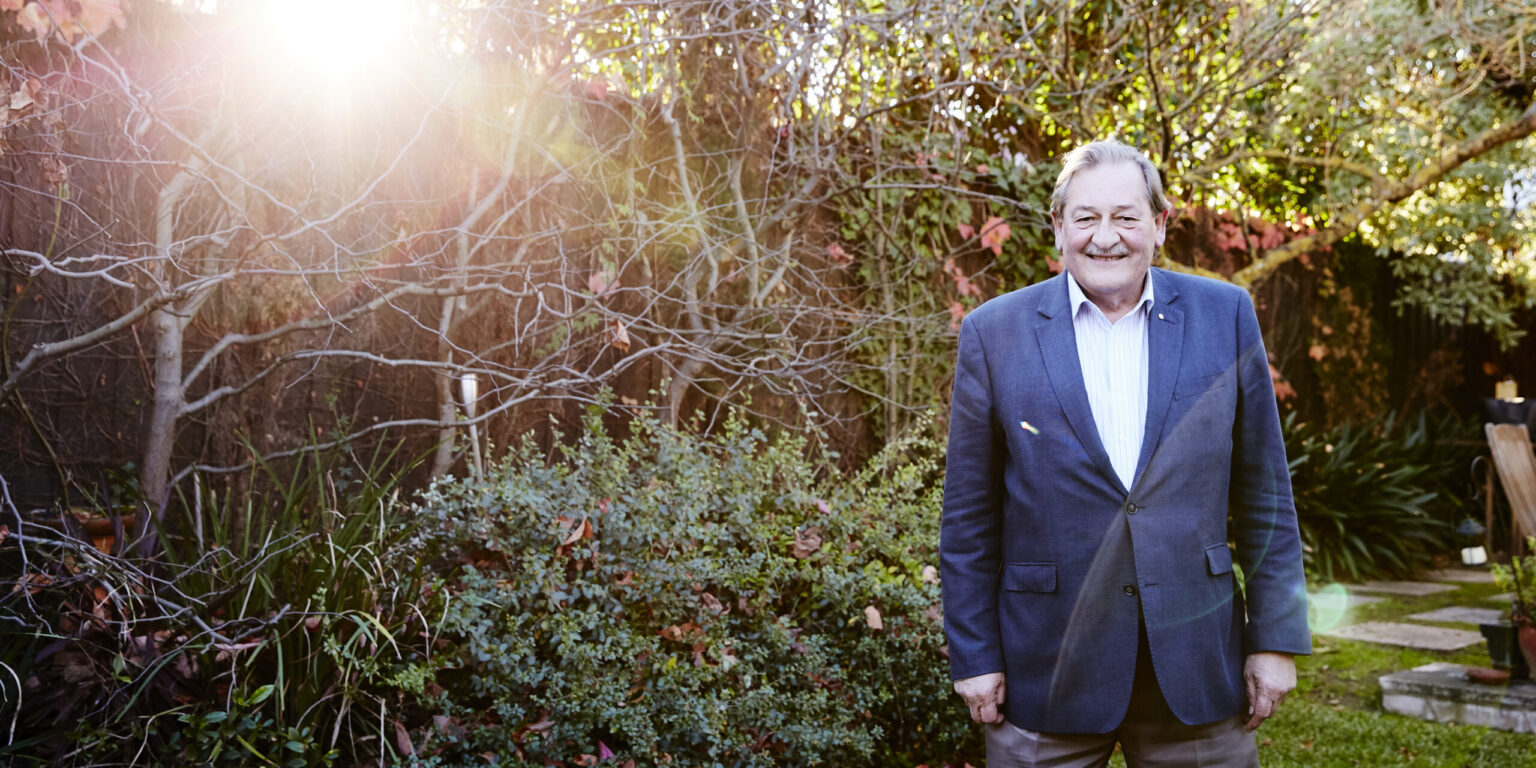
Graeme Johnson, former Partner at Hedderwick, Fookes & Alston, Arthur Robinson & Hedderwicks and Allens Arthur Robinson (now Allens), sits down with Wilson Pateras Principal Mark Forte to reflect on his legal career, his approach to retirement planning and the value of having trusted financial advisers throughout different stages of life.
Mark: Graeme, did you always want to be a lawyer?
Graeme: Absolutely. I wanted to be a lawyer from about the age of six.
Mark: What do you think informed that decision?
Graeme: Perry Mason. I was impressionable, and he used to be able to get the guiltiest murderers off within an hour.
Mark: Oh, you’re the second lawyer I’ve met who said that!
Graeme: Well, that was it. I did have a change of direction in Year 11. I had a social studies teacher who had political views that were diametrically opposed to my parents. So, I became terribly interested in politics.
Mark: Did you pursue that interest at all?
Graeme: Yes, I did a double degree. I did an arts honours degree in politics and I did a law degree. I finished the politics degree after four years and completed two years of law. Completing my law degree made six years at University, and after that I thought, “you’ve wanted to be a lawyer forever, so do that!”
Mark: You mentioned earlier that you liked how Perry Mason solved criminal matters quickly. What area of the law did you work in, was it ever criminal?
Graeme: No. Never a criminal law firm. I started at Hedderwick, Fookes & Alston with a very good friend from University. That firm became Arthur, Robinson & Hedderwicks which became Allens Arthur Robinson and is now Allens. My friend and I went through this series of mergers, but we both wanted to do litigation. We tossed a coin and I lost. It’s the best toss I’ve ever lost.
Mark: Really!?
Graeme: Seriously, it was fantastic! I spent most of my legal career trying to keep people out of court. There’s an adage that I used to use with my clients, “If you go to the Supreme Court and you win, you lose. And if you lose, you’re absolutely buggered, because you have to pay the cost of the other side.” So, I spent most of my time getting involved at the earliest stage of a transaction to engineer it away from going to court.

Mark: What are three common misconceptions that people have about lawyers?
Graeme: They’re dishonest, they’re rich and they don’t care about anybody but themselves. All of which are incorrect.
Mark: Absolutely. What has been the most challenging aspect in your chosen category of law? And what was the most pleasurable aspect of it?
Graeme: I was very lucky to develop a practice in sports law. As a sports nut, this gave me the opportunity to become involved in major sporting events around the world. The opportunities I had, the people I met, the events that I went to – these were just the icing on the cake for having done the legal work. That was the most gratifying thing in a specific sense. In a general sense, getting my clients across the line in a deal and sharing their happiness. That was the most satisfying thing.
As to the greatest challenges, I suppose keeping up with the law was a huge challenge. The way we were taught law in those days – it was a case book method. You learnt what cases had occurred and what the precedents were. I’m not a case man. I rarely read a case after I started practicing. So, the greatest challenge was getting my clients to accept that I had them at front of mind and I wanted to get them from A to B – in a way that isn’t going to put them in jail or going to cost them a million dollars. Once you build trust with people and they’re assured you’re going to get it done for them – then you can take off.
Mark: Is the trajectory different for a young lawyer today?
Graeme: Absolutely. Young lawyers can tell you almost to the month when they’re coming up for Senior Associate. They can then tell you to the month when they’re coming up for Partnership. Whereas I was telephoned by the Senior Partner’s Secretary on a Tuesday morning (I’d learnt that you to put your coat on when you visit the Senior Partner in case you weren’t coming back) and he said, “we decided last night that we’d like to make you an offer to join the Partnership.” I nearly fell out of it.
Mark: So, it wasn’t a forgone conclusion in your era?
Graeme: I had no idea. I’d asked a Partner who I trusted (he’s 92 now and we’re still great mates) about my performance and he said just to take solace from the fact that people weren’t telling me off all the time. I did talk to him about it, but at that time it was a completely out of the blue.
Mark: So, would you say that today’s young lawyers have more of sense defined career path and reward?
Graeme: Absolutely, absolutely.

Mark: When you began your career, did you have any particular goals for the future? Where there any real road maps or markers?
Graeme: No, no I didn’t.
Mark: At what point did you begin to develop those?
Graeme: When I became Partner.
Mark: At what point did you decide to use an accountant in your career? And why did you feel that you needed their expertise at that point?
Graeme: That was also when I became a Partner. I was salaried Partner and I was told that I would be offered equity in the firm. It was then that I decided that I needed an accountant. I just did not understand the figures. An acquaintance recommended an accountant and I went to him and he tried to guide me through the process. It was still beyond my comprehension. He was an older gentleman and he made an error in my tax return of about $35,000. I was furious, and I decided instead to look to the long term. Sadly, it was a bit like getting rid of my grandfather. But I needed someone who could see things through well into the future.
I heard about Trish England who specialised in high net worth individuals (which I certainly was not). I spoke to her and put the family’s affairs in her hands. She was fantastic. I could understand what she said, and we got along very well. Of course, Wilson Pateras took on her practice and now I’m with Wilson Pateras.
Mark: Say ten to fifteen years ago, were you focused on any particular financial goals, retirement, property investment, superfunds or similar?
Graeme: Actually, there was an incredible crisis with a Partner in London who lost a lot of money from a Trust Account. After this, the firm had some advisors come and talk to us individually about our own financial situations and goals. This finance gentleman asked me which two things I thought I should do to set myself up financially. My answer was to get rid of nondeductible debt and increase the amount I have in my superannuation. So, we sat down, had two sessions and guess what his two recommendations were at the end.
Mark The same?
Graeme: Exactly the same two things I’d said. This really reinforced these priorities. Superannuation especially.
Mark: Based on your experience, how old should lawyers be when they actually start thinking about superannuation?
Graeme: The day they start work.

Mark: And in say the last fifteen years of a lawyer’s career, what should they be putting in place for retirement?
Graeme: They’ll need start thinking about how much money they will need to retire on and what their lifestyle will be like. They need to have some type of plan to determine how much income they will need to live on and live well. They’ll also need to look at their superannuation and how they can structure that in terms of contributions going in. And how to invest it.
Really, from the age of fifty onwards, it’s about maximising the amount of money that you have. Additional costs will come up as you get older too – in relation to your adult children, health issues, downsizing houses or whatever else that you may need. You should consider worst case scenario, I suppose.
Mark: What would you say the greatest challenge posed to lawyers today is? Is it new laws, digital disruption, or structural changes within firms?
Graeme: All of the above. If you’re in a Partnership now, you are not secure for life. You must continue to really perform, as I don’t think that there’s necessarily security of tenure. Yes, the electronic too. The communication channels have changed, and it’s increased the expectation of clients. There’s the mindset that ‘if I can respond quickly, so can you’.
Mark: They were a very diverse variety of answers. Thank you so much, Graeme.
Wilson Pateras specialise in helping legal professionals, lawyers and law firms navigate their accounting, taxation, bookkeeping and long-term financial planning needs. Whether you’re building your legal career, managing your finances as a partner or preparing for retirement, our team can help you plan for a financially secure future. Learn more about our services for legal professionals here or get in touch with our team to discuss how we can support your financial goals.
This content has been prepared by Wilson Pateras to further our commitment to proactive services and advice for our clients, by providing current information and events. Any advice is of a general nature only and does not take into account your personal objectives or financial situation. Before making any decision, you should consider your particular circumstances and whether the information is suitable to your needs including by seeking professional advice. You should also read any relevant disclosure documents. Whilst every effort has been made to verify the accuracy of this information, Wilson Pateras, its officers, employees and agents disclaim all liability, to the extent permissible by law, for any error, inaccuracy in, or omission from, the information contained above including any loss or damage suffered by any person directly or indirectly through relying on this information. Liability limited by a scheme approved under Professional Standards Legislation.